WANT TO SAVE THIS RECIPE?
Are you ready to savor a bowl of Easy Korean Bibimbap? This colorful dish packs tons of flavor and is perfect for any meal. In this guide, I’ll walk you through every step, from picking the best ingredients to fun ways to customize your bowl. With bright veggies, tasty proteins, and the famous gochujang, you’ll be on your way to a satisfying meal. Let’s dive in!
Why I Love This Recipe
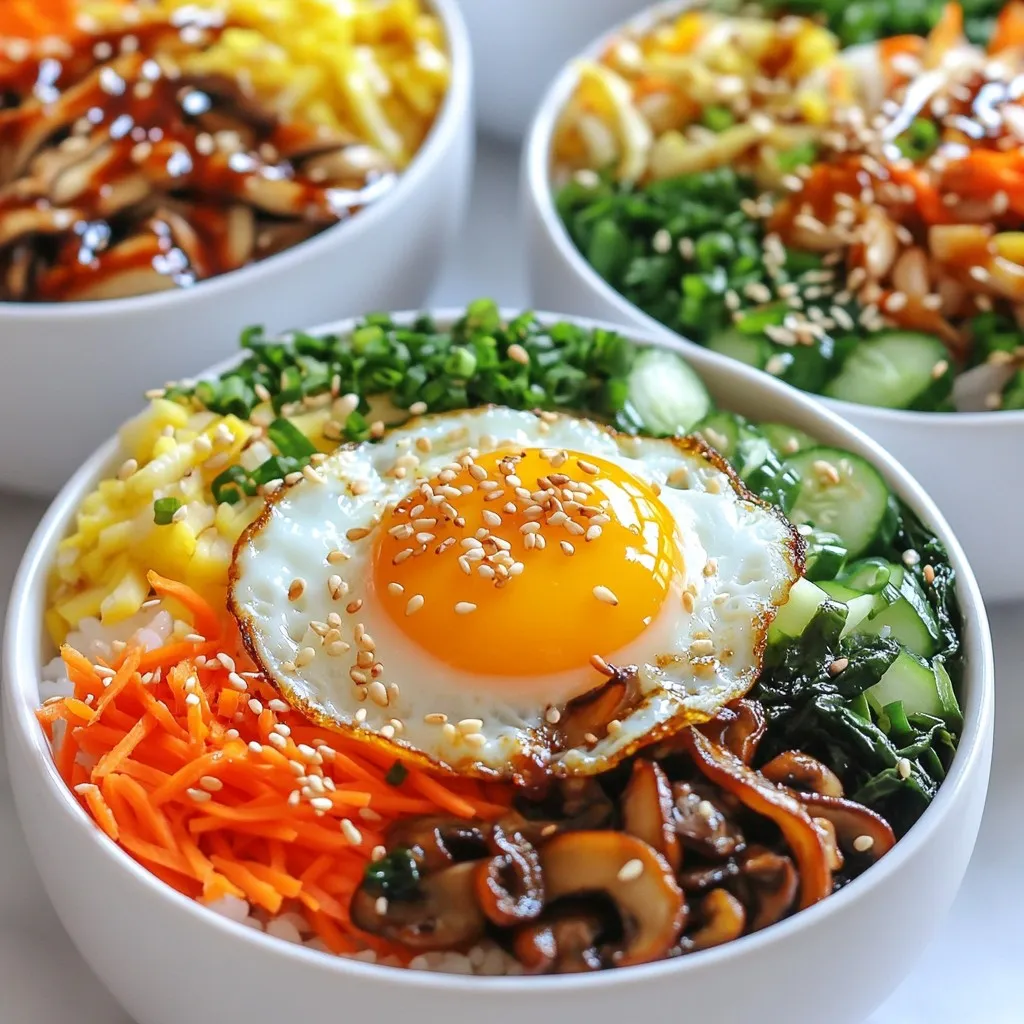
- Colorful Presentation: This bibimbap bowl is a feast for the eyes with its vibrant array of vegetables and toppings.
- Customizable Ingredients: You can easily swap out or add your favorite vegetables or proteins, making it versatile.
- Nutrient-Packed: Loaded with fresh veggies, this dish is not only delicious but also healthy and satisfying.
- Comfort Food: The warm rice, savory mushrooms, and runny egg create the perfect comforting bowl of goodness.
Ingredients
Main Ingredients for Easy Korean Bibimbap Bowls
– 2 cups cooked jasmine rice
– 1 cup shiitake mushrooms, sliced
– 1 cup carrots, grated
– 1 cup spinach leaves, blanched
– 1 cup cucumber, julienned
– 1 cup bean sprouts
– 2 large eggs
These ingredients create a colorful and tasty meal. You can swap out vegetables or add your favorites. For instance, try zucchini or radishes for a twist. You can also add proteins like chicken, beef, or tofu for extra heartiness.
Essential Condiments and Seasonings
– 3 tablespoons gochujang (Korean red chili paste)
– 2 tablespoons sesame oil
– 1 tablespoon soy sauce
– 1 tablespoon sesame seeds
– Salt, to taste
Gochujang adds heat and depth. If you can’t find it, use sriracha mixed with miso paste. Sesame oil gives a nutty flavor. If you want a lighter option, you can use olive oil instead.
Recommended Rice Types
Jasmine rice is the best choice for bibimbap. It has a soft texture and a pleasant aroma. Other options include short-grain rice, which is stickier. Long-grain rice works too, but it lacks the same chewy bite. Choose what you like best, but jasmine rice makes the dish shine.

Step-by-Step Instructions
Preparation of Vegetables
To start, we need to prepare the veggies. First, let’s sauté the mushrooms. Heat 1 tablespoon of sesame oil in a skillet over medium heat. Add the sliced shiitake mushrooms. Cook them for about 5 minutes until they turn golden brown. Lightly season with salt. Once done, take them out and set them aside.
Next, we will stir-fry the carrots. In the same skillet, add a little more sesame oil if needed. Toss in the grated carrots. Stir-fry for 2 to 3 minutes until they soften. Remove from heat and set aside with the mushrooms.
Now, we need to blanch the spinach. Boil a pot of water. Add the spinach leaves and blanch for about 30 seconds. Drain the spinach right away and rinse it under cold water. This stops the cooking. Squeeze out any extra water and mix in 1 teaspoon of soy sauce.
For the bean sprouts, use the same boiling water. Lightly steam them for 2 minutes. Drain and set aside with the other veggies.
Cooking the Eggs
It’s time to cook the eggs. In a new pan, heat a small amount of sesame oil over medium heat. Fry the eggs sunny side up. Make sure the whites are fully set. Keep the yolks runny for that perfect gooey texture. If you like, you can scramble the eggs instead. Just break the yolks and stir them in the pan until cooked.
Assembly of Bibimbap Bowls
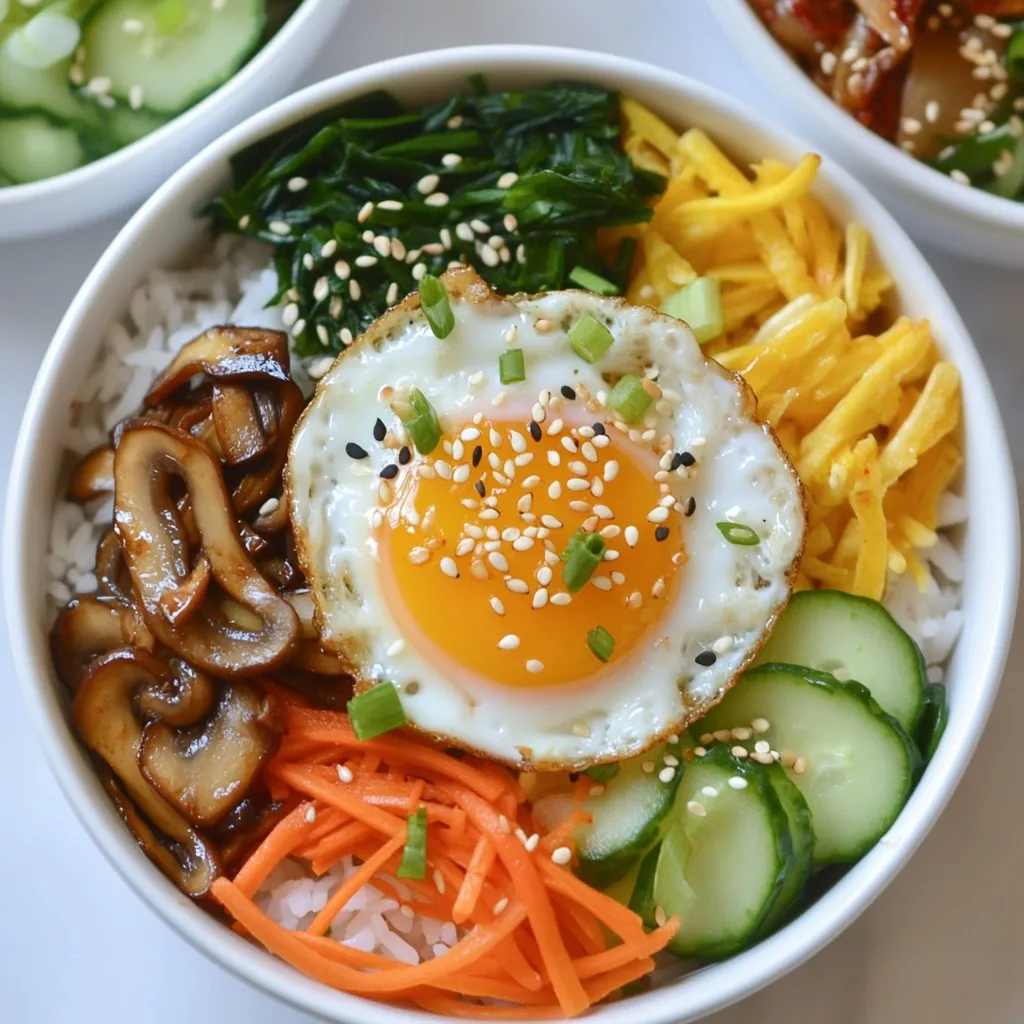
Now, let’s put our bibimbap bowls together. Start with 2 cups of warm cooked jasmine rice. Divide it evenly among four bowls. Neatly arrange the sautéed mushrooms, stir-fried carrots, blanched spinach, fresh cucumber, and steamed bean sprouts on top of the rice. Make it colorful!
Next, place a perfectly fried egg in the center of each bowl. Drizzle gochujang and a bit more sesame oil on top for extra flavor. Finally, sprinkle sesame seeds over each bowl and add sliced green onions for a nice crunch. Serve the bibimbap bowls warm, so everyone can mix in their ingredients and enjoy the tasty meal!
Tips & Tricks
Best Practices for Meal Prep
You can save time by prepping ingredients ahead. Wash and chop your veggies on the weekend. Slice shiitake mushrooms and julienne cucumbers early. Grate carrots and blanch spinach to keep them fresh. Store each ingredient in separate airtight containers. This keeps them crisp and ready to use.
– Mushrooms: Keep in a container lined with a paper towel.
– Carrots: Store in a sealed bag to prevent drying.
– Spinach: Use a damp paper towel to keep it fresh.
– Cucumber: Store in water to maintain crunch.
Balancing Flavors and Textures
Creating the right flavor balance is key to Bibimbap. Gochujang adds spice and depth. Pair it with sesame oil for a nutty touch. Mix these two together in a small bowl for a sauce that packs a punch.
– For Crunch: Add sliced radishes or toasted sesame seeds on top.
– For Spice: Try adding a dash of chili flakes or a splash of hot sauce.
Serving Suggestions
Presentation matters! Serve your Bibimbap bowls warm for the best taste. Pair them with a light cucumber salad or some pickled vegetables on the side. Green tea or a light beer can complement the meal well.
– For a Visual Appeal: Arrange veggies in sections on the rice.
– Garnish: Finish with green onions and sesame seeds for a pop of color.
Pro Tips
- Fresh Ingredients: Use the freshest vegetables you can find for a vibrant and crunchy bibimbap. Fresh ingredients enhance the flavor and texture of the dish.
- Egg Cooking Technique: For a perfect runny yolk, cook the eggs on low heat and cover the pan with a lid for a minute. This will steam the top while keeping the yolk intact.
- Gochujang Variations: Adjust the amount of gochujang based on your spice preference. You can mix it with a little honey or sugar for a sweeter taste if desired.
- Mix Before Eating: Encourage mixing all the ingredients together just before eating to allow the flavors to blend beautifully, creating a harmonious taste in every bite.
Variations
Customizing Your Bibimbap
To make your bibimbap special, add proteins like chicken, beef, or tofu.
– Chicken: Grill or sauté diced chicken. Season with salt or gochujang for flavor.
– Beef: Use thin strips of beef. Marinate for a few minutes before cooking.
– Tofu: Firm tofu works well. Cube and sauté it until golden brown.
For vegetarian or vegan options, you can skip meat entirely. Add extra vegetables or use tempeh. This keeps the meal tasty and satisfying without meat.
Seasonal Vegetable Swaps
Using seasonal veggies can make your bibimbap even more exciting. Try these swaps:
– Spring: Use asparagus or peas for a fresh touch.
– Summer: Add zucchini or bell peppers for a colorful mix.
– Fall: Sweet potatoes or mushrooms make a warm, hearty dish.
– Winter: Kale or root vegetables like carrots can add depth.
Feel free to experiment with traditional ingredients. This lets you discover new flavors and textures.
Different Sauces and Toppings
While gochujang is a classic, there are other sauces to try.
– Soy Sauce: A splash can enhance the umami flavor.
– Sriracha: For those who crave more heat.
– Sesame Dressing: Adds a nutty flavor that pairs well with veggies.
Toppings can also elevate your meal.
– Nuts: Chopped peanuts or cashews add crunch.
– Herbs: Fresh cilantro or mint can brighten the dish.
– Kimchi: A side of spicy kimchi adds zing and flavor.
Mix and match sauces and toppings to create your perfect bibimbap bowl!
Storage Info
How to Properly Store Leftovers
To keep your bibimbap fresh, store leftovers in the fridge. Use airtight containers. This helps maintain the flavors and textures. You can refrigerate the bibimbap for up to three days. For longer storage, freeze the rice and veggies separately. This way, they won’t get soggy. When you heat them, they will taste fresh again.
Reheating Instructions
When reheating bibimbap, avoid using the microwave if you can. Instead, use a skillet over low heat. This keeps the rice from getting mushy. Add a splash of water to keep it moist. Stir gently to warm it up evenly. For the veggies, add them to the skillet until heated through. This keeps their crunch and flavor.
Shelf Life of Ingredients
Each ingredient in bibimbap has a different shelf life. Cooked rice lasts about four to six days in the fridge. Sautéed mushrooms and stir-fried carrots last three to five days. Spinach and cucumber should be eaten within three days. Look for signs of spoilage like a bad smell or slimy texture. If you see these, it’s best to toss them out.
FAQs
What is Bibimbap?
Bibimbap is a popular Korean dish. It means “mixed rice.” This dish comes from Korea. It has many colorful ingredients. Traditionally, it includes rice, vegetables, and meat. The dish often has a fried egg on top. People mix everything before eating. Bibimbap shows the beauty of balance in Korean cooking. It is also a symbol of harmony. Each bite gives you a mix of flavors and textures.
Can I make Bibimbap in advance?
Yes, you can make Bibimbap in advance! Meal prep is a great option. Cook the rice, vegetables, and eggs ahead of time. Store each ingredient separately for freshness. You can keep them in the fridge for up to three days. When you are ready to eat, just warm everything up. Assemble the bowls and enjoy a quick meal. This makes it easy for busy days.
What can I use instead of gochujang?
If you don’t have gochujang, try these options:
– Sriracha for heat
– Chili paste for spice
– Miso with a bit of sugar
– Hot sauce for flavor
These can help you adjust spice levels. Just remember, gochujang has a sweet and spicy taste. You might want to add a bit of sugar or honey to your substitute.
How do I make my Bibimbap spicy?
To add more heat, try these options:
– Add more gochujang.
– Mix in red pepper flakes.
– Use spicy sesame oil.
For spice-loving fans, try topping with fresh jalapeños or kimchi. These will add a kick to your Bibimbap. Always taste as you go to find your perfect heat level.
In this blog post, I shared the secrets to making delicious Korean Bibimbap bowls. We covered the main ingredients, from fresh vegetables to essential proteins. You learned how to prepare each component, cook the perfect egg, and assemble your bowl. I also provided tips on meal prep, flavor balance, and creative variations.
Bibimbap is not just a meal; it’s a canvas for your culinary creativity. Enjoy making it your ow
Easy Korean Bibimbap Bowls
Discover the ultimate Easy Korean Bibimbap recipe with vibrant bibimbap bowls that are not only delicious but also packed with nutrients. This healthy Korean rice bowl features sautéed shiitake mushrooms, fresh veggies, and perfectly fried eggs, making it a fantastic vegetarian bibimbap recipe. Enjoy a nutritious meal that's easy to prepare and bursting with flavor. Save this easy bibimbap recipe for your next meal! #KoreanBibimbap #HealthyRecipes #VegetarianRecipes #EasyCooking
2 cups cooked jasmine rice
1 cup shiitake mushrooms, sliced
1 cup carrots, grated
1 cup spinach leaves, blanched
1 cup cucumber, julienned
1 cup bean sprouts
2 large eggs
3 tablespoons gochujang (Korean red chili paste)
2 tablespoons sesame oil
1 tablespoon soy sauce
1 tablespoon sesame seeds
Salt, to taste
Green onions, thinly sliced for garnish
Sauté the Mushrooms: In a skillet over medium heat, warm 1 tablespoon of sesame oil. Add the sliced shiitake mushrooms and sauté until they are beautifully golden brown, approximately 5 minutes. Season lightly with salt, then remove them from the pan and set aside.
Stir-Fry the Carrots: In the same skillet, drizzle a touch more sesame oil if needed, and toss in the grated carrots. Stir-fry for 2-3 minutes until they soften, then remove from heat and set aside.
Blanch the Spinach: Bring a pot of water to a boil. Add the spinach leaves and blanch them for about 30 seconds. Drain immediately and rinse under cold water to halt the cooking process. Squeeze out any excess moisture and toss the spinach with 1 teaspoon of soy sauce.
Steam the Bean Sprouts: Use the same boiling water to lightly steam the bean sprouts for around 2 minutes. Drain and set aside with the other vegetables.
Fry the Eggs: In another pan, heat a small amount of sesame oil over medium heat. Fry the eggs sunny side up (or to your desired doneness) until the whites are fully set while keeping the yolks runny for that perfect gooey texture.
Assemble the Bibimbap Bowls: Divide the warm, cooked jasmine rice evenly among four bowls. Neatly arrange the sautéed shiitake mushrooms, stir-fried carrots, blanched spinach, fresh cucumber, and steamed bean sprouts on top of the rice, creating a colorful display.
Top with Eggs and Sauce: Place a perfectly fried egg in the center of each bowl. Generously drizzle the bowls with gochujang and additional sesame oil according to your taste preference.
Garnish: Sprinkle each bowl with sesame seeds and finish with a scattering of sliced green onions for an added crunch and aesthetic appeal.
Prep Time, Total Time, Servings: 15 minutes | 30 minutes | 4 servings
- Presentation Tips: Serve the vibrant bibimbap bowls immediately while everything is warm, inviting diners to mix their ingredients together to create their own blended flavors!
WANT TO SAVE THIS RECIPE?